# 生命周期
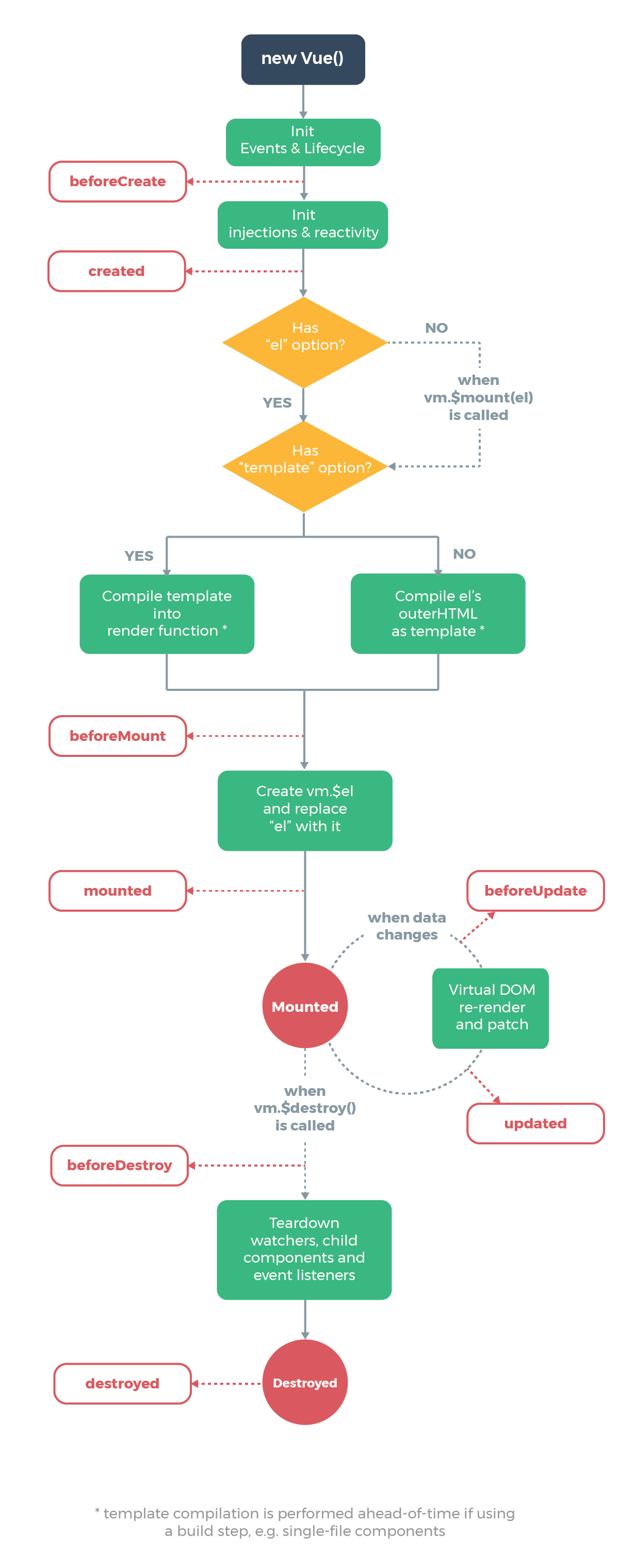
Vue对象的生命周期流程如下图所示。
# create阶段
典型的是通过new Vue(options)创建Vue实例的过程
import("../vue.study.esm.js").then((module) => {
  const { Vue } = module;
  const app = new Vue({});
});
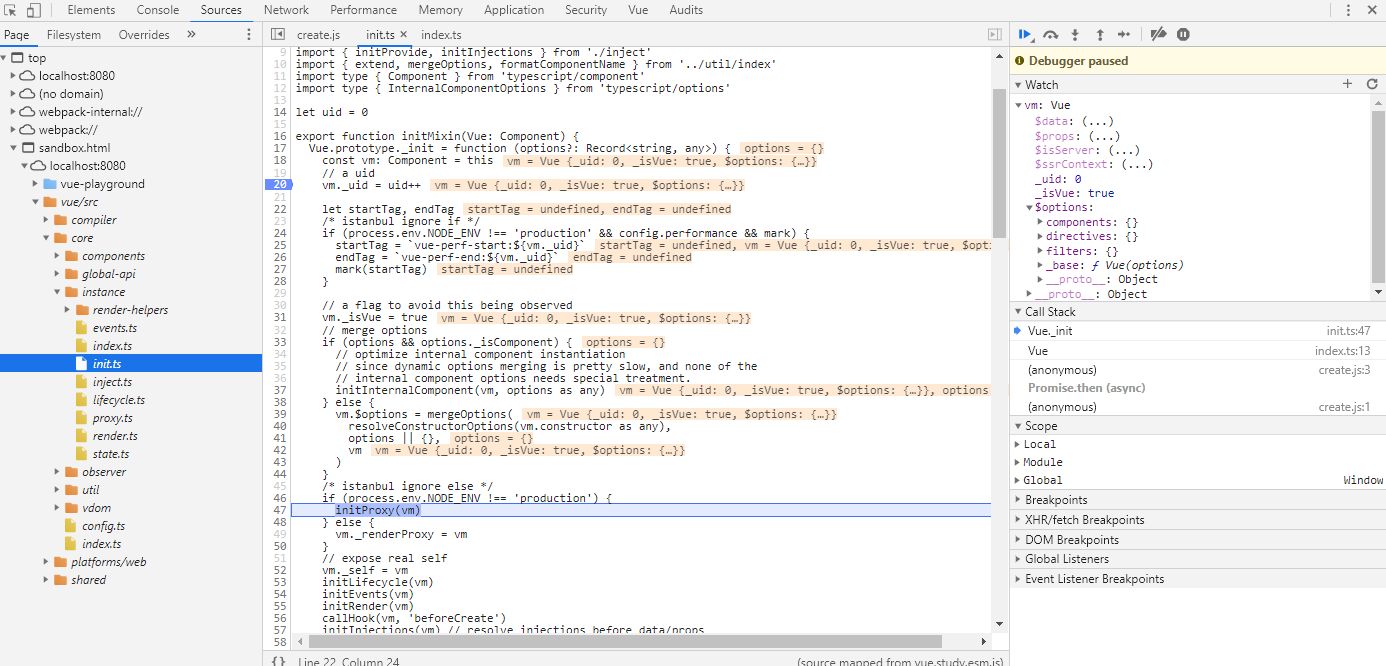
通过单步调试可以看到最终会执行src/core/instance/init.ts中_init方法,观察vm变化,可以看到vm被添加_uid、$options等属性和方法。注意beforeCreate和created钩子调用时机。
export function initMixin(Vue: Component) {
  Vue.prototype._init = function (options?: Record<string, any>) {
    const vm: Component = this
    // a uid
    vm._uid = uid++

    let startTag, endTag
    /* istanbul ignore if */
    if (process.env.NODE_ENV !== 'production' && config.performance && mark) {
      startTag = `vue-perf-start:${vm._uid}`
      endTag = `vue-perf-end:${vm._uid}`
      mark(startTag)
    }

    // a flag to avoid this being observed
    vm._isVue = true
    // merge options
    if (options && options._isComponent) {
      // optimize internal component instantiation
      // since dynamic options merging is pretty slow, and none of the
      // internal component options needs special treatment.
      initInternalComponent(vm, options as any)
    } else {
      vm.$options = mergeOptions(
        resolveConstructorOptions(vm.constructor as any),
        options || {},
        vm
      )
    }
    /* istanbul ignore else */
    if (process.env.NODE_ENV !== 'production') {
      initProxy(vm)
    } else {
      vm._renderProxy = vm
    }
    // expose real self
    vm._self = vm
    initLifecycle(vm)
    initEvents(vm)
    initRender(vm)
    callHook(vm, 'beforeCreate')
    initInjections(vm) // resolve injections before data/props
    initState(vm)
    initProvide(vm) // resolve provide after data/props
    callHook(vm, 'created')

    /* istanbul ignore if */
    if (process.env.NODE_ENV !== 'production' && config.performance && mark) {
      vm._name = formatComponentName(vm, false)
      mark(endTag)
      measure(`vue ${vm._name} init`, startTag, endTag)
    }

    if (vm.$options.el) {
      vm.$mount(vm.$options.el)
    }
  }
}
# mount阶段
通过vm.$mount调用来实现mount。
import("../vue.study.esm.js").then((module) => {
  const { Vue } = module;
  const app = new Vue({
    render(h) {
      return h("span", null, "Test");
    },
  });
  app.$mount("#app");
});
通过单步调试可以看到最终会执行src/core/instance/lifecycle.ts中mountComponent方法,通过一个绑定_update和_render方法Watcher来实现首次渲染和动态渲染。注意beforeMount、beforeUpdate和mounted
export function mountComponent(
  vm: Component,
  el: Element | null | undefined,
  hydrating?: boolean
): Component {
  vm.$el = el;
  if (!vm.$options.render) {
    // @ts-expect-error invalid type
    vm.$options.render = createEmptyVNode;
    if (process.env.NODE_ENV !== "production") {
      /* istanbul ignore if */
      if (
        (vm.$options.template && vm.$options.template.charAt(0) !== "#") ||
        vm.$options.el ||
        el
      ) {
        warn(
          "You are using the runtime-only build of Vue where the template " +
            "compiler is not available. Either pre-compile the templates into " +
            "render functions, or use the compiler-included build.",
          vm
        );
      } else {
        warn(
          "Failed to mount component: template or render function not defined.",
          vm
        );
      }
    }
  }
  callHook(vm, "beforeMount");

  let updateComponent;
  /* istanbul ignore if */
  if (process.env.NODE_ENV !== "production" && config.performance && mark) {
    updateComponent = () => {
      const name = vm._name;
      const id = vm._uid;
      const startTag = `vue-perf-start:${id}`;
      const endTag = `vue-perf-end:${id}`;

      mark(startTag);
      const vnode = vm._render();
      mark(endTag);
      measure(`vue ${name} render`, startTag, endTag);

      mark(startTag);
      vm._update(vnode, hydrating);
      mark(endTag);
      measure(`vue ${name} patch`, startTag, endTag);
    };
  } else {
    updateComponent = () => {
      vm._update(vm._render(), hydrating);
    };
  }

  // we set this to vm._watcher inside the watcher's constructor
  // since the watcher's initial patch may call $forceUpdate (e.g. inside child
  // component's mounted hook), which relies on vm._watcher being already defined
  new Watcher(
    vm,
    updateComponent,
    noop,
    {
      before() {
        if (vm._isMounted && !vm._isDestroyed) {
          callHook(vm, "beforeUpdate");
        }
      },
    },
    true /* isRenderWatcher */
  );
  hydrating = false;

  // manually mounted instance, call mounted on self
  // mounted is called for render-created child components in its inserted hook
  if (vm.$vnode == null) {
    vm._isMounted = true;
    callHook(vm, "mounted");
  }
  return vm;
}
# update阶段
在渲染Watcher上实现update。参考上面可知beforeUpdate绑定的before上,而updated在src/core/observer/scheduler.ts中callUpdatedHooks调用。
import("../vue.study.esm.js").then((module) => {
  const { Vue } = module;
  const app = new Vue({
    data() {
      return {
        value: 1,
      };
    },
    render(h) {
      const that = this
      return h(
        "span",
        {
          on: {
            click() {
              that.value++;
            },
          },
        },
        `Count ${this.value}`
      );
    },
  });
  app.$mount("#app");
});
执行Watcher.run队列后会根据是否为渲染Watcher判处执行update钩子。
function callUpdatedHooks(queue) {
  let i = queue.length
  while (i--) {
    const watcher = queue[i]
    const vm = watcher.vm
    if (vm._watcher === watcher && vm._isMounted && !vm._isDestroyed) {
      callHook(vm, 'updated')
    }
  }
}
# destroy阶段
通过vm.$destroy调用实现,实际情况中在组件_update时会被调用,这个将在后续内容讨论。
let app;
import("../vue.study.esm.js").then((module) => {
    const { Vue } = module;
    app = new Vue({
      data() {
        return {
          value: 1,
        };
      },
      render(h) {
        const that = this
        return h(
          "span",
          {
            on: {
              click() {
                // 需要注意的是Vue对象销毁后并不会直接影响其在页面上的显示
                // (显示内容不会直接消失,但相关响应式功能已停止)
                that.$destroy();
              },
            },
          },
          `Count ${this.value}`
        );
      },
    });
    app.$mount("#app");
});注意观察销毁之后的情况,在$destroy中销毁了DOM上的事件监听。
Vue.prototype.$destroy = function () {
  const vm: Component = this;
  if (vm._isBeingDestroyed) {
    return;
  }
  callHook(vm, "beforeDestroy");
  vm._isBeingDestroyed = true;
  // remove self from parent
  const parent = vm.$parent;
  if (parent && !parent._isBeingDestroyed && !vm.$options.abstract) {
    remove(parent.$children, vm);
  }
  // teardown watchers
  if (vm._watcher) {
    vm._watcher.teardown();
  }
  let i = vm._watchers.length;
  while (i--) {
    vm._watchers[i].teardown();
  }
  // remove reference from data ob
  // frozen object may not have observer.
  if (vm._data.__ob__) {
    vm._data.__ob__.vmCount--;
  }
  // call the last hook...
  vm._isDestroyed = true;
  // invoke destroy hooks on current rendered tree
  vm.__patch__(vm._vnode, null);
  // fire destroyed hook
  callHook(vm, "destroyed");
  // turn off all instance listeners.
  vm.$off();
  // remove __vue__ reference
  if (vm.$el) {
    vm.$el.__vue__ = null;
  }
  // release circular reference (#6759)
  if (vm.$vnode) {
    vm.$vnode.parent = null;
  }
};